The invisible SEO mistake that tells Google you are in the wrong city
Jan 30, 2026
•
5
mins to read
You can do everything right and still lose jobs online.
Your work is solid. Customers are happy. Your website looks clean. Your Google profile exists. From the outside, everything looks fine.
But behind the scenes, one invisible mistake can quietly tell Google you are the wrong business in the wrong place.
We have just it happen with one of the company in Logan, Utah.
When our AI flagged something that made no sense
At SalesShortcut, we use AI agents to scan competitor websites for SEO gaps. The goal is simple. Find what others miss so our clients can win more local searches.
During a scan of a window cleaning company in Logan, Utah, our system kept pulling one strange phrase.
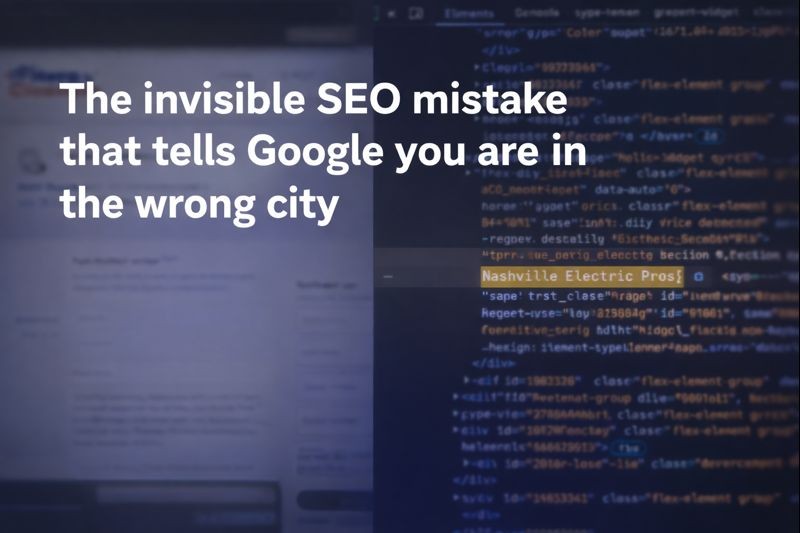
Nashville Electric Pros.
That made no sense. The business was in Utah. They cleaned houses. Nothing about electricians. Nothing about Tennessee.
So we checked manually.
The homepage looked perfect. The about page was clean. Reviews were real. No mention of Nashville anywhere a human could see. We did even simple Cmd + F search.
At first glance, it looked like an AI error.
Why this kind of mistake actually matters
If this were just a typo, it would not be a big deal. But this was something worse.
Google does not see websites the way people do.
Customers see what is visible on the page. Google sees the raw code underneath. If that code says you are an electrician in Nashville, Google gets confused about who you are and where you belong.
Local SEO depends on clarity.
Your city, your service, and your category all have to line up. When they do not, rankings slip quietly. Calls slow down. And no one knows why.
Looking at the site like a bot, not a human
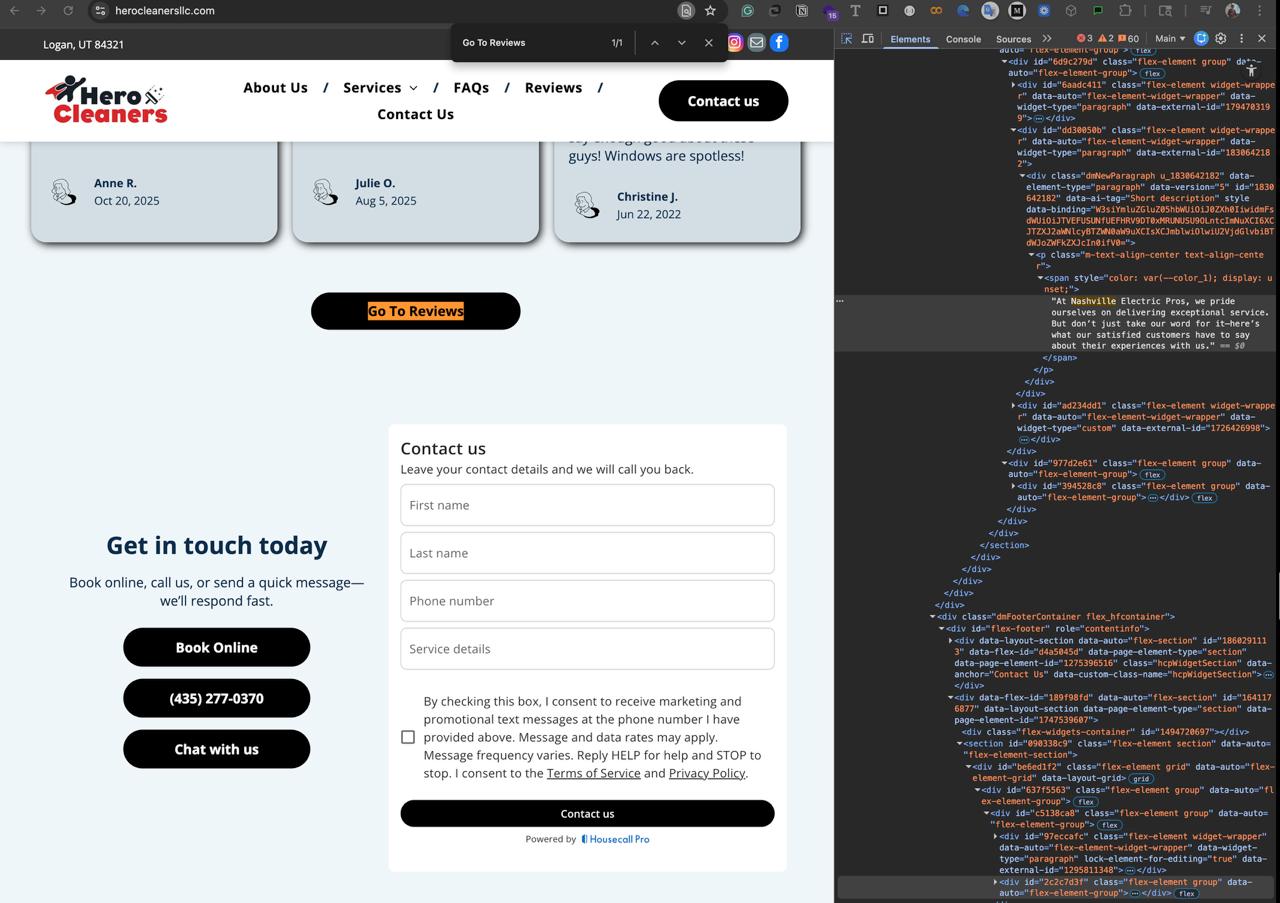
Once we stopped looking at the site visually and opened the source code, the problem showed up instantly.
Hidden inside a reviews section was leftover text from a template. It referenced an entirely different business in an entirely different state.
The section was set to display none. That means customers never see it. But search engines do.
From Google’s perspective, the site was sending mixed signals. Logan, Utah window cleaner on the surface. Nashville electrician underneath.
That kind of confusion kills local trust.
How this happens more often than you think
This was not negligence. It was a common shortcut.
Many small business websites are built from templates. Sometimes from past projects. Sometimes from third party widgets. Sometimes by designers who hide sections instead of deleting them.
Visually, everything looks fine. Technically, the site is polluted with irrelevant content.
Most business owners never check the raw code. And most marketers never do either.
Bots do.
Why Google punishes mixed signals
Google’s job is to give searchers the most accurate local result.
If your website mentions one city, your Google profile lists another, and your hidden code references a third, Google loses confidence.
When confidence drops, rankings drop. Not dramatically. Not overnight. Just enough that your competitor gets the call instead of you.
How to fix hidden SEO mistakes for good
Fixing this is simple, but only if you do it the right way.
First, you must delete the bad content entirely. Hiding it is not enough. Display settings do nothing for crawlers. The text must be removed from the site.
If you use a website builder, check for hidden sections, global templates, and reused blocks. Delete anything that does not belong to your business.
If you use WordPress, search your theme files, footer widgets, and plugin outputs for placeholder business names or locations.
Second, you must tell search engines the site has changed.
Use Google Search Console to request indexing for the fixed page. This pushes it back into the crawl queue immediately.
If IndexNow is available through your platform, turn it on. It alerts multiple search engines at once.
Waiting weeks for Google to notice is how problems linger.
We also found missed opportunity
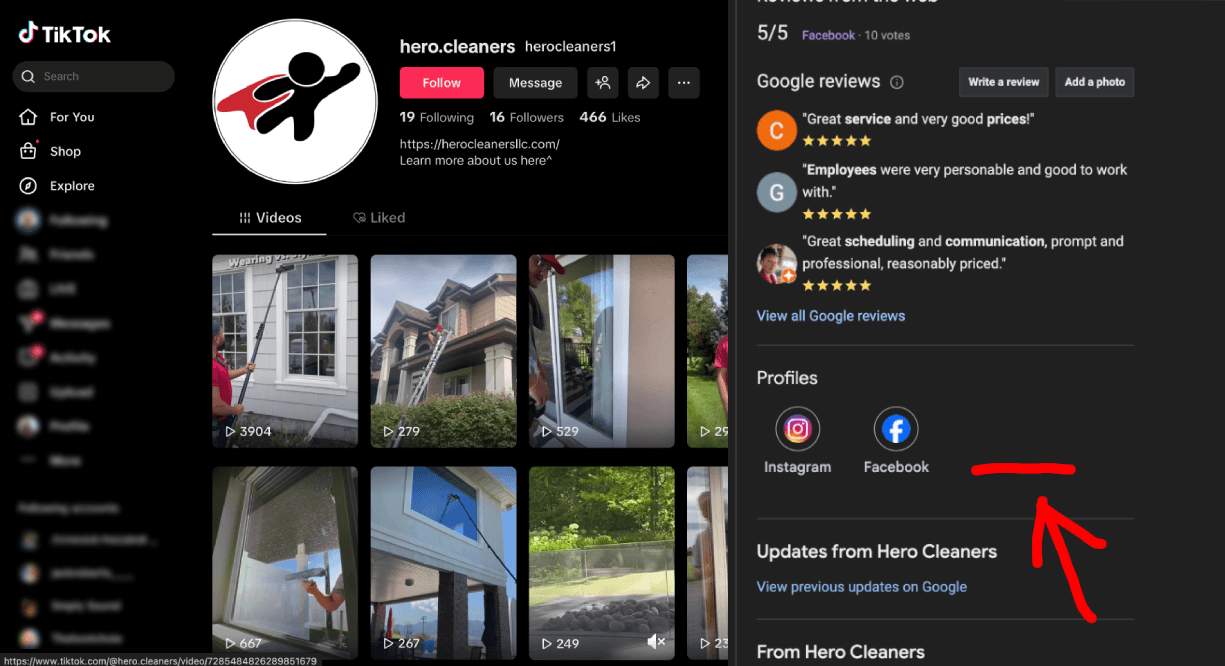
We already discussed the importance of connecting your social media accounts to your Google Business Profile, and we found that this business has an active TikTok account, but it is not connected.
You never know how powerful a random click to your social media profile can be—especially if you spend time and effort making it look great. And if you don’t know what to film next, we analyze your local market and tell you exactly what to shoot. Just follow the playbook.
The bigger lesson for home service pros
Your website has two audiences. One is customers. The other is bots.
If you only design for humans, you miss what actually controls rankings.
This is why so many good operators struggle online. Not because their work is bad. Not because marketing is impossible. But because tiny technical details quietly stack against them.
And no one has time to hunt for ghosts in source code after a ten hour workday.
Why we built SalesShortcut this way
This exact issue is why our system exists.
AI agents scan everything a bot can see. Humans review what matters. Problems surface before they cost months of lost calls.
You do not need to learn SEO. You do not need to inspect code. You just need to do great work.
We handle the rest. Because the best cleaner in town should not lose jobs to hidden template text that should have been deleted years ago.